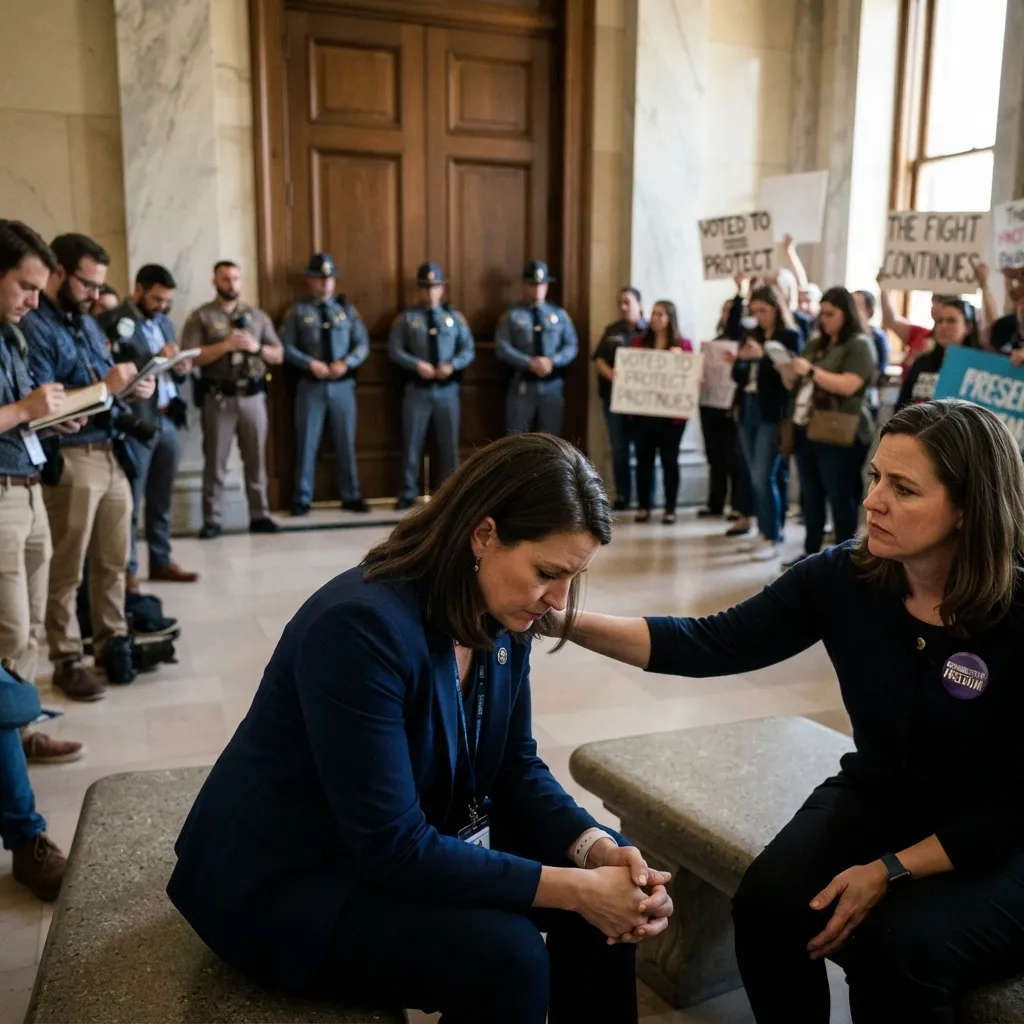
Democratic candidates who centered their campaigns on abortion rights saw significant success in recent midterm elections, securing key victories across Congress and various state governments. However, these wins are unlikely to translate into immediate or sweeping national policy shifts. While the party expanded its footprint, it failed to seize total control of the legislatures and governors’ offices in states with the harshest bans, meaning those restrictive laws remain firmly in place for now. Even with a Democratic majority in both houses of Congress, any attempt to pass federal legislation barring state-level bans would almost certainly face a veto from President Donald Trump.
Despite the federal stalemate, several states are becoming battlegrounds for lasting constitutional change. In Pennsylvania and Wisconsin, newly empowered Democratic leadership is pushing to amend state constitutions to explicitly guarantee abortion rights. This mirrors a growing trend seen in a dozen other states where voters have already approved similar protections. Meanwhile, in Georgia, Governor-elect Keisha Lance Bottoms and Lieutenant Governor Josh McLaurin hope to peel away enough Republican support to repeal the state’s strict six-week ban, citing heartbreaking reports of maternal deaths caused by physician hesitation under current law.
The shift in personnel is also creating openings in the legal arena, particularly in Texas. Newly elected Attorney General Nathan Johnson has signaled a departure from his predecessor’s aggressive tactics, stating he will not pursue out-of-state medical providers who ship abortion pills via telehealth. This move represents a significant win for advocates who argue that medication is the primary lifeline for people living in ban states. By potentially withdrawing from lawsuits against federal policies regarding mifepristone, Johnson could effectively lower the legal barriers for reproductive healthcare access within the Lone Star State.
On the opposing side, anti-abortion activists are pivoting their strategy toward restricting pharmaceutical access at the federal level. Groups like SBA Pro-Life America are urging the Trump administration and the FDA to crack down on mail order prescriptions for abortion pills to close loopholes created by telehealth services. Some Republican strongholds continue to double down; Ohio recently moved to bar telehealth prescriptions despite previous voter support for abortion access. As both sides dig in, it appears that while Democrats have captured more territory on paper, the actual landscape of reproductive legality remains fragmented and heavily dependent on local geography.